Regulation and the Persistence of Biological Systems
Biology comprises systems trying to survive and thrive. Those that thrive in stable times will be the most abundant.
But what if times are less stable? Environments vary, and biology is notoriously random and unpredictable: heat shock, ecological competition, and starvation all perturb biological systems.
Conventional adaptation often fails in challenging times and alternate survival strategies are needed. These more flexible strategies are the product of successful regulation and the architectures that make that regulation possible.
Regulatory Paradigms Across Scales
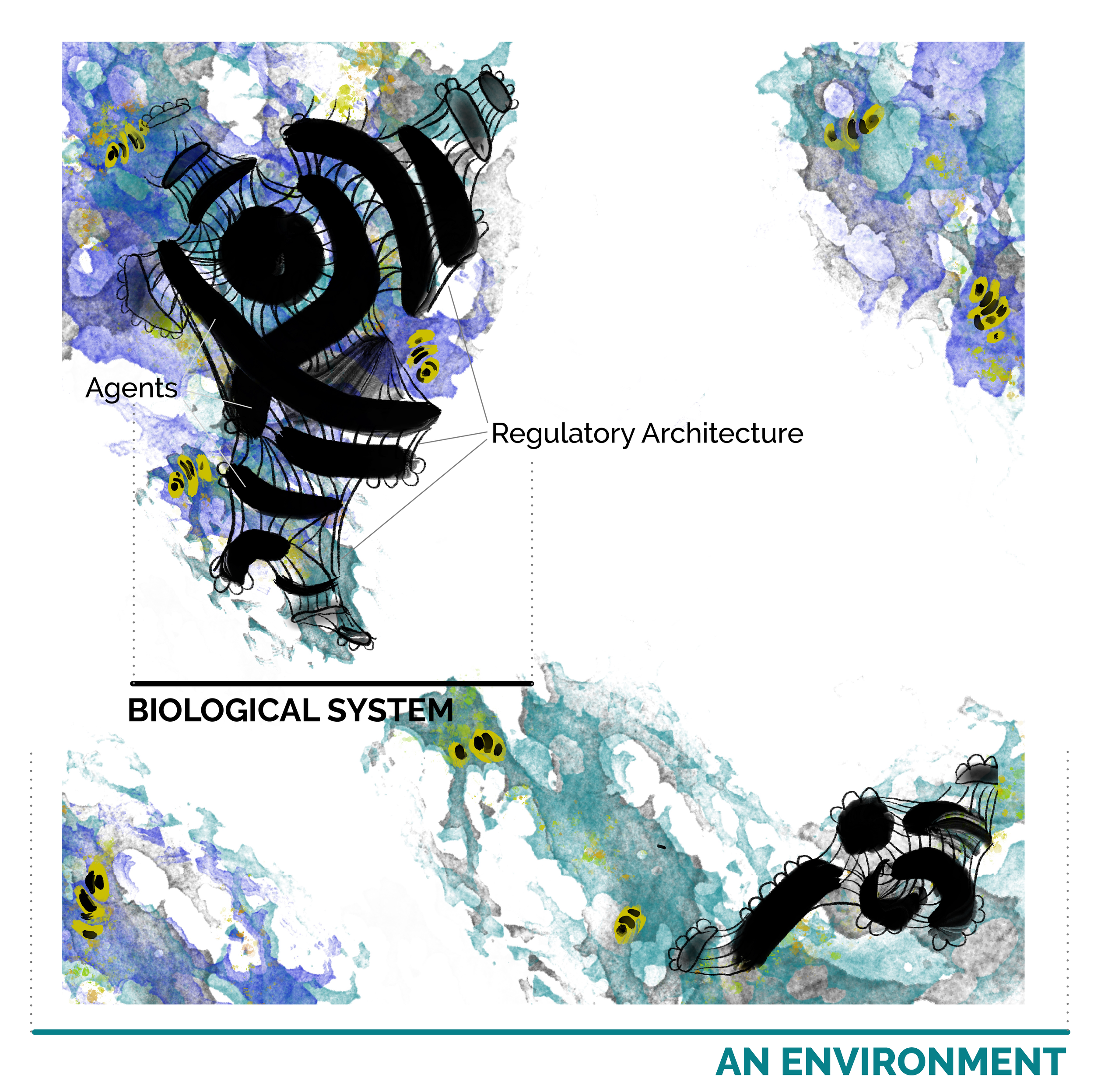
Regulatory architectures are made up of processes and agents that facilitate a system’s persistence. These architectures are composed of code and regulators: the code stores the programs of regulatory function, while the regulators are the agents that carry out the encoded programs. Across all scales of biological life, systems have regulatory architectures, from proteins in the simplest bacteria to the bureaucracies that govern societies.
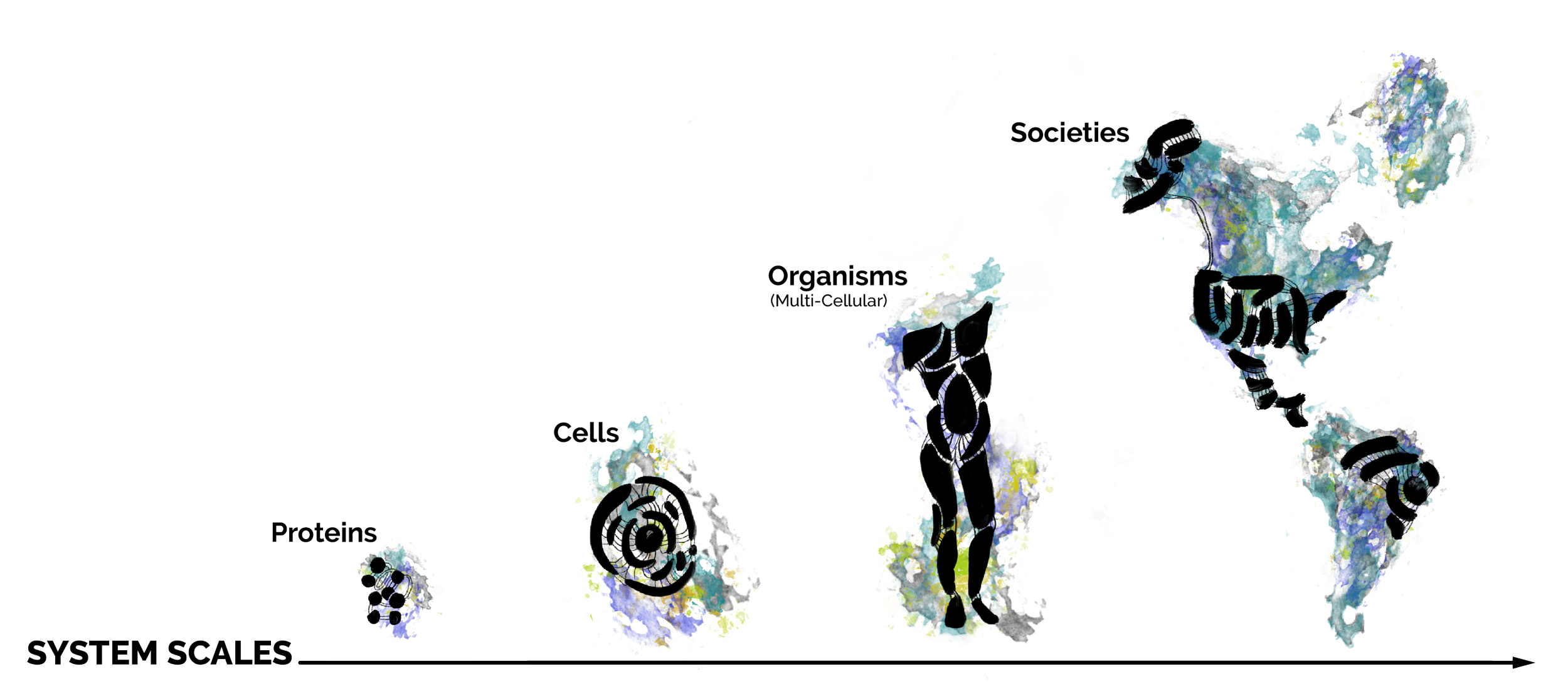
Inside cells, transcription factors act to the coordinate gene expression coded in DNA, leading to distinct expression states and cell types. In multicellular organisms, brains and nervous systems coordinate organs and appendages to achieve desired physiological outcomes. In society, laws passed from centralized institutions—from the rules of sport to legal codes—govern our behavior.
Regulation is a cost—whether paid in cellular resources, metabolic energy, or taxpayer dollars. But it enables systems to maintain coordinated function despite internal and external perturbations. To regulate is to facilitate stability and robustness, allowing complex systems to persist.
Bridging Regulatory Paradigms
How do regulatory architectures evolve?
Regulatory architectures evolve with the systems they regulate. While usually studied in isolation, the evolution of regulation shares properties across very different domains, from cells, to sports, to entire societies. These shared properties make it possible to compare regulatory systems directly, allowing for generic principles of regulatory evolution to be discovered as simple systems evolve to be ever more complex.
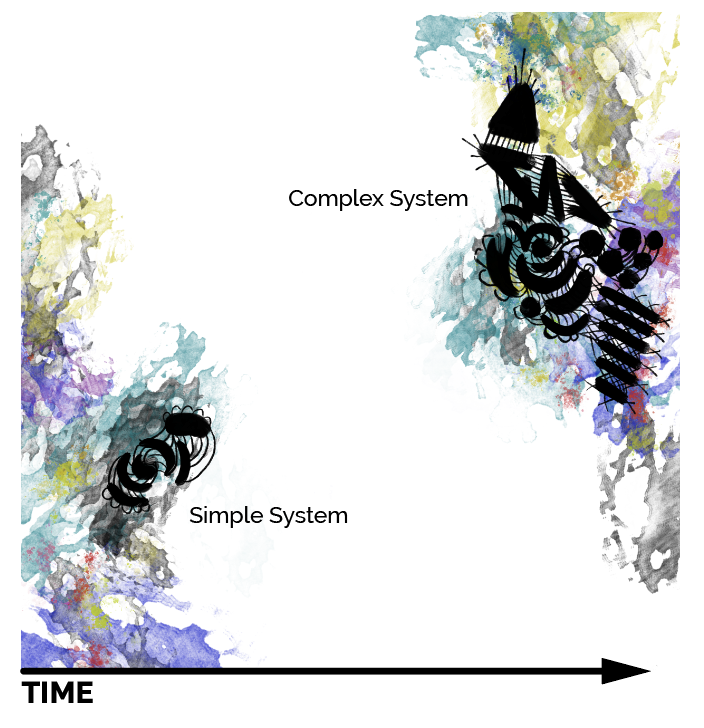
Work in the R3 Lab on regulatory architecture evolution combines data collection, cross-system theoretical frameworks, and mathematical and evolutionary modeling. Recent work has looked at how solutions are evolved in genetic regulation to thrive in highly varied environments, and how the evolution of the Laws of Cricket, over 300 years, reveals core principles of regulatory architecture evolution.
The R3 Lab is now developing new modeling frameworks to evolve regulatory architectures computationally, linking regulatory patterns that emerge to selection pressures that make regulation necessary. Future work will collect new cross-system data, examine how specificity evolves in gene-regulatory networks, and drive the construction of new computational and mathematical theories to understand what selection pressures drive regulatory evolution.
Featured Works:
Chia, D., Youn, H., Singer, J., Jeong, D., Kempes, C., Ogbunugafor, C. B., ... & Holehouse, J. (2026). Three centuries of the Laws of Cricket reveal core principles of the evolution of regulatory mechanisms. arXiv preprint arXiv:2607.05586. In revision at PNAS.
Holehouse, J., Redner, S., Yang, V. C., Krapivsky, P. L., Arroyo, J. I., West, G. B., ... & Youn, H. (2025). A generative model of function growth explains hidden self-similarities across biological and social systems. arXiv preprint arXiv:2509.14468. Under review at Journal of the Royal Society Interface.
Jeong*, D., Holehouse*, J., Yoon, J., Kempes, C. P., West, G. B., & Youn, H. (2026). A Dataset Showing a Century of Evolution in the Complexity of the United States Legal Code. Scientific Data, 13(1), 13.
How does regulation deal with randomness?
Regulation protects systems from unpredictable situations, which often arrive as random perturbations. While randomness is frequently seen as detrimental for a system’s ability to control its state and its surroundings, it is also integral to how regulation itself functions. Understanding the role of randomness in regulation is a central goal of the R3 Lab.
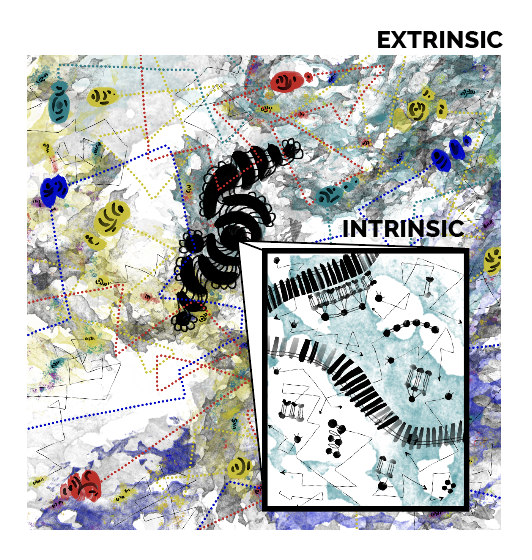
From extrinsic noise arising from variable environments, to intrinsic noise inherent to regulatory architecture itself, different sources of random fluctuation have distinct impacts on regulatory architecture. Our work aims to disentangle the importance of these two forms of variability from both dynamical and evolutionary perspectives.
Future research centers on novel qualitative behaviors that arise when deterministic and steady-state assumptions in theoretical biology break down simultaneously; on defining new metrics through which random behaviors can be quantified; and on constructing new stochastic models of rule growth and regulatory networks.
Featured Works:
Öcal, K., Sukys, A., Kumar, A., & Holehouse, J. (2026). The origins of transient bimodality. arXiv preprint arXiv:2607.16531. Under review at Journal of the Royal Society Interface.
Holehouse, J. (2026). Quantifying broken detailed balance in transcription. npj Complexity, 3(1), 10.
Kumar, A., & Holehouse, J. (2026). Branching under first-passage resetting. arXiv preprint arXiv:2605.16693. In revision at Physical Review Letters.
How does persistence drive the evolution of robustness?
Robust regulation ensures that a system persists. The R3 Lab investigates the evolution of robust regulatory architectures to deal with both dynamical and evolutionary persistence. Dynamical persistence concerns the ability of a system to survive perturbations on timescales shorter than evolutionary change, such as within the lifetime of a cell, organism, or institution. Evolutionary persistence refers to the ability to generate regulatory architectures that are evolvable, and can adapt to pressures that act over evolutionary timescales.
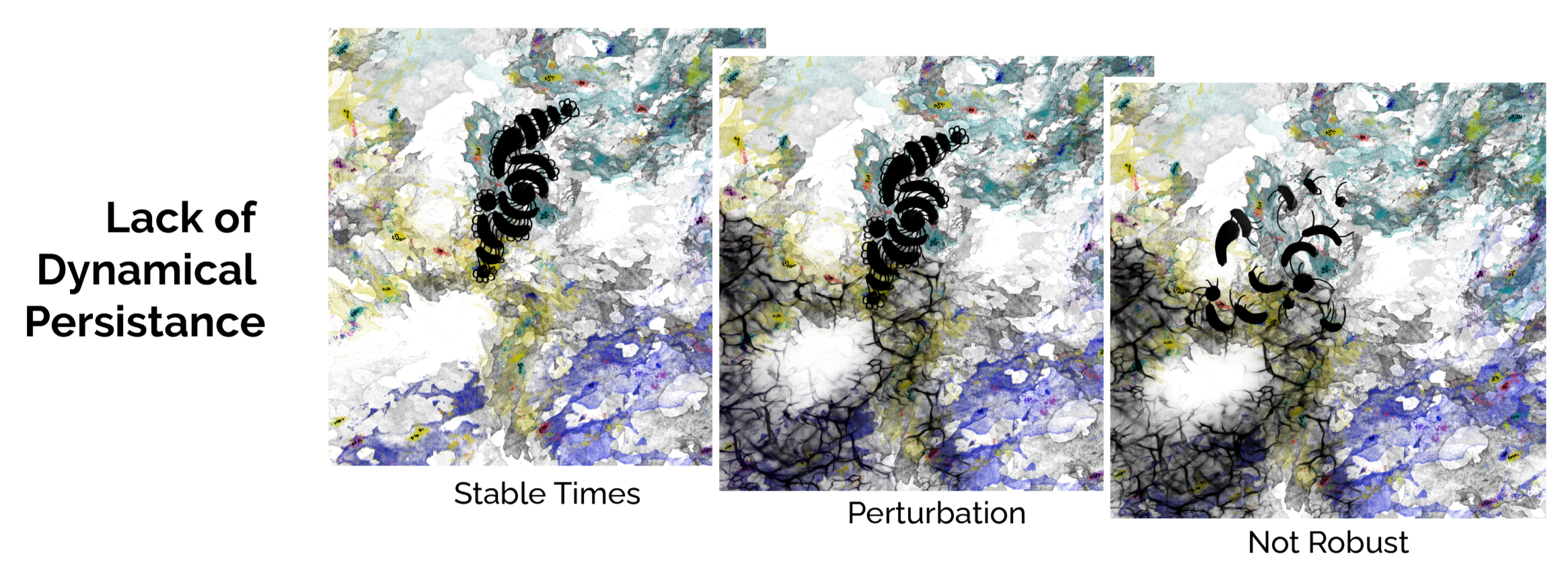
The R3 Lab is currently working to understand how systems use a diversity of functional elements to function, and how this diversity scales as systems get larger. Additionally, we are working to understand how gene regulatory networks achieve robust solutions to achieve optimal phenotypes in the face of both intrinsic and extrinsic sources of noise.
Featured Works:
Holehouse, J., West, G. B., Kempes, C. P., & Swain, A. (2026). Microbial Ecosystems Reveal a Universal Signature of Ecological Assembly. bioRxiv, 2026-07. Under review at Ecology Letters.
Dzib, L. I. E., & Holehouse, J. (2026). How is gene-regulatory evolution affected by cell-to-cell variability? arXiv preprint arXiv:2604.26082. In revision at Evolution.
Yang*, V. C., Holehouse*, J., Youn, H., Arroyo, J. I., Redner, S., West, G. B., & Kempes, C. P. (2026). Scaling laws for function diversity and specialization across socioeconomic and biological complex systems. Proceedings of the National Academy of Sciences, 123(7), e2509729123.
How far can a cross-system analogy go? The R3 Lab’s goal is to develop principles for a Science of Regulation that spans the entire tree of life, across the physical, biological, and social sciences. We approach this through three questions: